Why We Stopped Chasing RFPs
We used to respond to every request for proposal that landed in our inbox. Then we did the math.

For the first two years of Doer Geeks, we treated every RFP like a gift. A Fortune 500 company wants a proposal? Drop everything. A government agency needs a bid by Friday? Cancel the weekend. We were convinced that volume was the path to growth.
The real cost of a proposal
We tracked our time for a quarter. The average RFP response consumed forty hours of senior engineering time, twelve hours of design work, and eight hours of project management. That is sixty hours — a full sprint — spent on a document that had a twelve percent win rate.
We were spending more time writing about work than doing work.
What we do instead
We replaced the RFP pipeline with a qualification call. Thirty minutes, no slide deck, no homework. We ask three questions: What does success look like in six months? Who has the authority to say yes? Is the budget allocated or aspirational?
- Define success criteria before writing a single line of code
- Talk to the decision-maker directly — not a procurement coordinator
- Walk away from projects where the budget conversation is deferred
The numbers since the switch
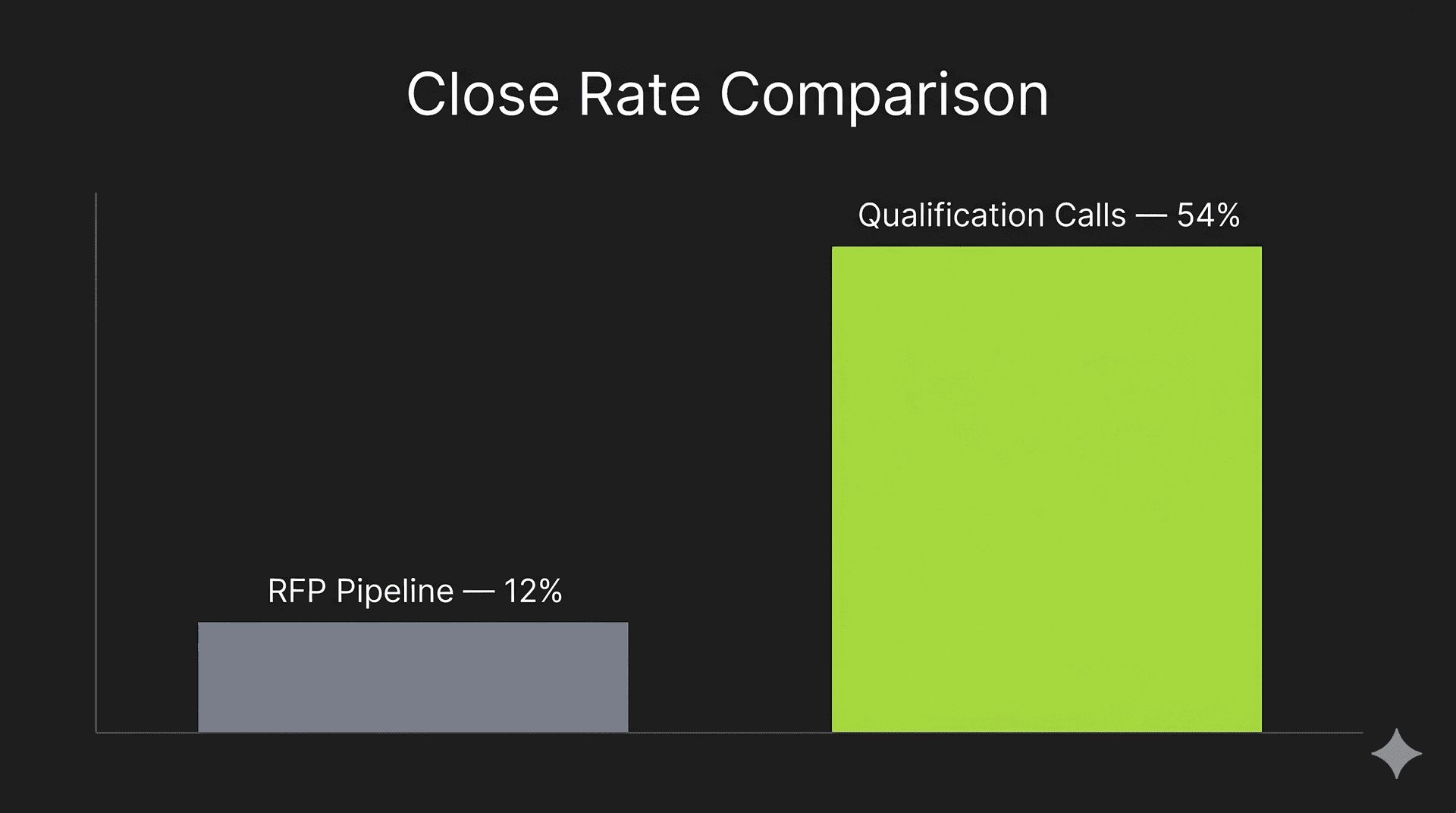
In the twelve months after dropping RFPs, our close rate went from twelve percent to fifty-four percent. Revenue per engagement increased by forty percent because we were selecting for fit, not volume. And our team stopped burning out on speculative work.
When RFPs still make sense
We are not anti-RFP on principle. If you are a large consultancy with a dedicated proposal team and a high volume of inbound, the economics work differently. For a small, opinionated studio like ours, the math just did not add up.
// Simple ROI check we run before any proposal commitment
const hoursToPropose = 60;
const winRate = 0.12;
const expectedValue = contractValue * winRate;
const costToPropose = hoursToPropose * blendedRate;
const roi = (expectedValue - costToPropose) / costToPropose;
If you are a founder wondering whether to respond to that RFP sitting in your inbox, do the math first. Your time is the most expensive thing you have.